
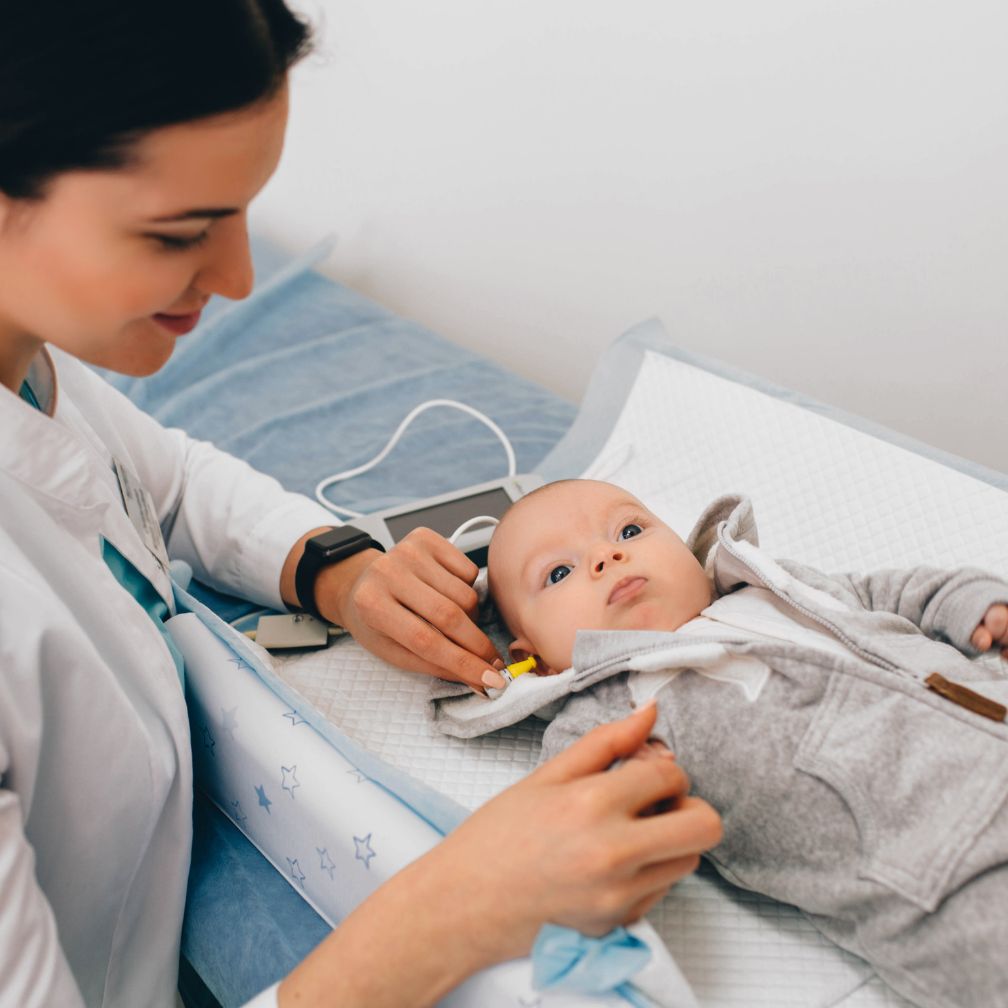
For new parents, discovering that their infant experiences auditory deficits can feel deeply shocking and distressing. The positive takeaway remains that through the use of early evaluations and supportive care, infants experiencing hearing loss are able to excel. Unquestionably, such infants can develop speech patterns, relational abilities, and robust connections with their society, shaping a truly wonderful life!
Pairing classic hearing devices with advanced cochlear technology offers two primary clinical solutions for supporting infants who exhibit hearing loss. In the upcoming breakdown, we dissect their basic functions and explain how to choose the ideal device for your child.
Unpacking the Foundations of Infant Hearing Loss
Auditory loss in newborn babies can be driven by several underlying origins, including:
- Specific hereditary genetic markers (even completely lacking any prior parental history)
- Active congenital infections including cytomegalovirus (CMV) or rubella
- Severe delivery difficulties, such as acute oxygen deprivation or early birth
- Certain intensive care medications administered in specialized newborn facilities
Which effort serves as the single most essential step? Timely diagnostic identification. Owing to these factors, infants cared for in United States nurseries receive auditory evaluations prior to heading home. Experienced pediatric audiologists maintain the recognized “1-3-6” care benchmark:
- First-stage screening completed before 1 month of life
- Fully diagnosed within 3 months of age
- Targeted intervention (incorporating wearable devices or care) started within 6 months of age
Hitting these clinical targets offers infants an unparalleled opportunity for normal speech, expressive language, and cognitive progression. Should you need direction on these diagnostic stages, your primary pediatrician remains ready to assist!
Pediatric Hearing Aids for Young Babies
For young children showing mild to severe auditory impairment, wearable hearing aids frequently remain the primary therapeutic standard. Such small, wearable instruments amplify acoustic signals, helping infants perceive spoken dialogue and surrounding sounds with greater clarity.
Pediatric-grade hearing devices prove to be:
- Uniquely safe for fitting on young babies only several weeks post-birth
- Built featuring cushioned, ergonomic ear molds that are replaced as the baby grows
- Built featuring secure, tamper-resistant battery latches and dedicated pediatric safety components
- Precisely calibrated by a trained pediatric audiologist to mirror your infant’s unique auditory curve
Throughout early childhood growth, hearing instruments necessitate frequent maintenance to ensure proper placement and accurate acoustic output.
Cochlear Implants for Infants
When an infant presents with profound to severe sensorineural hearing impairment and fails to receive sufficient benefit from standard hearing aids, a cochlear implant might be advised. Differing from standard hearing aids, cochlear technology:
- Entail precision surgical insertion inside the inner ear delivering direct electrical signals to the brain
- Successfully bypass non-working zones in the cochlea
- Process incoming audio into electrical signals that activate the hearing nerve directly
Advanced cochlear implants function as:
- Formally cleared by the FDA for young children aged 9 to 12 months and older
- Maximally beneficial when combined with early intervention services and dedicated home support
- Sanctioned strictly following a complete diagnostic battery by an expert audiologist and ENT specialist
This process includes neuroimaging scans, advanced hearing evaluations, and open dialogue concerning long-term communicative results.
Hearing Aids vs. Cochlear Implants: What’s the Difference?
- Mild to severe hearing loss targets Hearing Aids; Severe to profound levels of loss demand Cochlear Implants
- Non-Invasive acoustic positioning: Hearing Aids; Invasive surgical procedure: Cochlear Implants
- Standard sound amplification logic: Hearing Aids; Electrical signal stimulation conversion: Cochlear Implants
- Intervention starts in early infancy: Hearing Aids; Procedure starts at 9-12 months: Cochlear Implants
Concluding Guidance on Pediatric Hearing Technology
If your baby has been diagnosed with hearing loss, you have access to outstanding technological paths and plenty of support. Thanks to collaboration with dedicated pediatric audiologists, many young children achieve communication skills that mirror those of their age group.
No matter if your infant proves better suited for conventional hearing aids or advanced cochlear implants, prompt intervention delivers permanent lifelong benefits.
Are you seeking answers about your child’s overall hearing wellness? Connect with our office today to arrange a comprehensive evaluation and customized treatment program.