
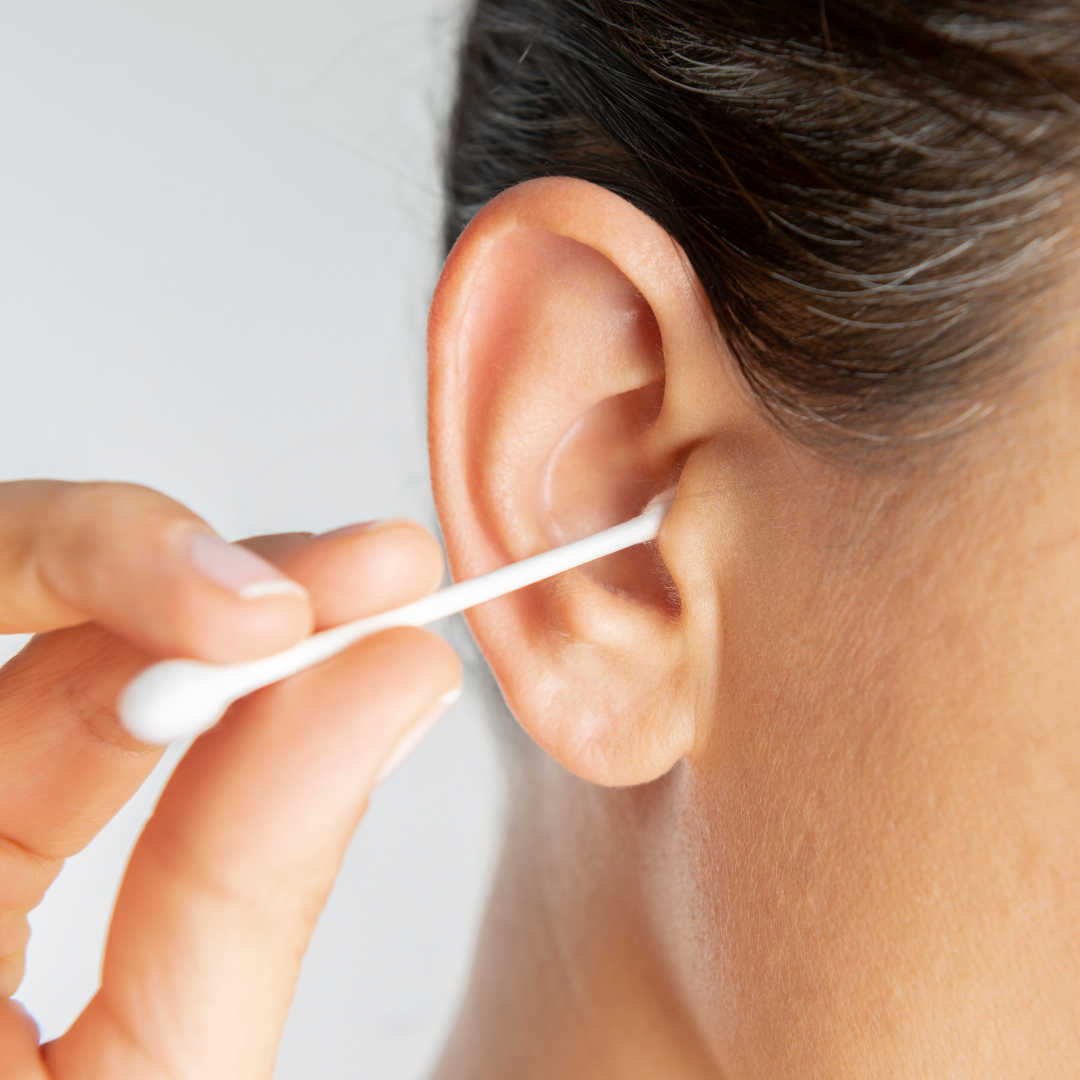
While many consider cotton swabs handy cleaning devices, placing them in the ear canal disrupts natural clearing and causes physical damage. Our audiology team evaluates whether cerumen accumulation requires clinical extraction and suggests techniques tailored to your auditory health. Ears don’t always need manual cleaning; however, if wax builds up, we can help patients safely remove excess wax.
The Hidden Dangers of Cleaning Ears with Q-Tips
Earwax, or cerumen, is not dirt. Cerumen works to entrap airborne particles, deter infectious pathogens, hydrate the auditory canal, and protect thin dermal layers. Jaw movement and normal skin migration gradually carry old wax toward the ear opening, where it flakes away or washes off during bathing.
Pushing a cotton applicator past the canal opening disrupts this natural physiological transport. Even if the swab gathers a trace of surface cerumen, it routinely compacts the remaining mass against the eardrum. Ongoing cotton swab use regularly condenses wax into a solid obstruction, causing a congested feeling that drives repetitive cleaning attempts.
You may gently utilize cotton swabs across the external auricle, but you should avoid inserting them into the internal canal.
How Can Ears Get Damaged from Q-Tip Use?
Canal skin is thin, vascular, and highly vulnerable to mechanical abrasions. Small abrasions can cause pain or bleeding and create an opening for bacteria, increasing the risk of an outer-ear infection. Additionally, the swab tip can shear off and lodge itself securely inside the ear canal.
Common mechanical traumas from swabs include:
- Severe earwax impaction near the tympanic membrane
- Scratches, irritation, swelling, or bleeding
- Pathogenic infection involving the ear canal
- Foreign body retention including detached cotton fibers
- A torn or perforated eardrum
- Dislocation or injury of the delicate hearing ossicles
- Temporary conductive loss or permanent auditory changes
- Tinnitus, dizziness, or severe ear pain
Though critical trauma is uncommon, an unexpected collision, a sudden slip, or overzealous penetration can cause extensive ear injury.
Determining the Proper Frequency for Earwax Removal
The majority of individuals do not require routine or scheduled cerumen extraction. Normal ears migrate cerumen toward the opening constantly, allowing routine bathing to cleanse the visible exterior. Overcleaning can dry or irritate the canal and may increase the likelihood of infection or impaction.
Clinical clearing is warranted if cerumen occludes the auditory pathway, prevents diagnostic evaluation of the eardrum, affects a hearing aid, or sparks discomfort.
Safe Home Strategies for Managing Earwax
When cerumen creates no clinical symptoms, leaving the canal alone remains the most prudent approach. Clean exclusively around the exterior auricle using a soft, moist cloth, letting the auditory canal clean itself naturally.
If hardened wax requires softening, we can guide you toward over-the-counter cerumenolytics or drops featuring mineral oil, carbamide peroxide, glycerin, or saline. Use only the labeled amount and for the labeled duration. Discontinue the product right away if you encounter otalgia, severe dizziness, contact dermatitis, or aggravating symptoms.
At-home ear flushing is not suitable for all ears and demands prior clinical verification and step-by-step guidance from a provider. Never use a dental water jet. Avoid ear candles, metal scoops, camera-guided tools, hairpins, and home suction devices. These dangerous tools carry severe risks of burning skin, lacerating canal tissue, puncturing the tympanic membrane, or packing wax inward.
Clinical Indicators for Professional Earwax Removal
Schedule an appointment when an ear remains plugged after an appropriate softening treatment, wax appears deeply impacted, or home care repeatedly fails. Expert removal is the safest path for patients who struggle to hold still, individuals with narrow ear canals, hearing aid wearers, or those with surgical contraindications to irrigation.
You should seek professional assessment for:
- Unresolved ear discomfort, persistent canal itching, or touch sensitivity
- Visible blood, purulent discharge, clear fluid drainage, or offensive ear odors
- Fever combined with visible swelling or redness around the ear
- The sudden appearance of tinnitus or true dizziness
- Sudden reduction in hearing or auditory loss that persists after wax extraction
- A possible eardrum perforation or cotton fragment trapped inside
- Persistent impactions interfering with hearing aid operation
A sudden reduction in one ear’s hearing demands emergency evaluation rather than an assumption of wax blockage. Rapid audiological testing differentiates simple cerumen obstruction from serious, time-sensitive inner ear disorders.
How Can a Doctor Remove Excess Earwax?
First, we inspect the auditory canal under otoscopic or microscopic visualization to confirm wax occlusion and rule out infections, tissue trauma, or eardrum perforations. Selecting the optimal extraction technique depends upon cerumen density, canal geometry, patient health history, prior otologic surgeries, and procedural comfort.
Safe audiological extraction methods include:
- Wax-softening drops before or during the appointment
- Controlled irrigation with body-temperature fluid when the eardrum is intact
- Gentle micro-suction performed under clear binocular visualization
- Manual removal with a loop, curette, or small forceps
Direct visual control ensures the provider maneuvers safely around thin canal skin and stops if any tenderness develops. Utilizing more than one removal technique may be necessary to resolve dry or severely compacted wax. After clearance, we conduct a follow-up visualization to ensure the canal walls and tympanic membrane show no complications. Should lingering fullness, tinnitus, balance instability, or reduced hearing continue, targeted diagnostic exams can pinpoint the secondary factor.
Schedule an Expert Cerumen Removal Consultation
When your ears feel plugged or you notice auditory changes, schedule an appointment with our specialists instead of grabbing a cotton swab. During your consultation, we examine current symptoms, prior ear surgeries, hearing aid habits, home remedies, and physiological factors that drive wax accumulation. Contact our office directly to book your safe cerumen-removal appointment.